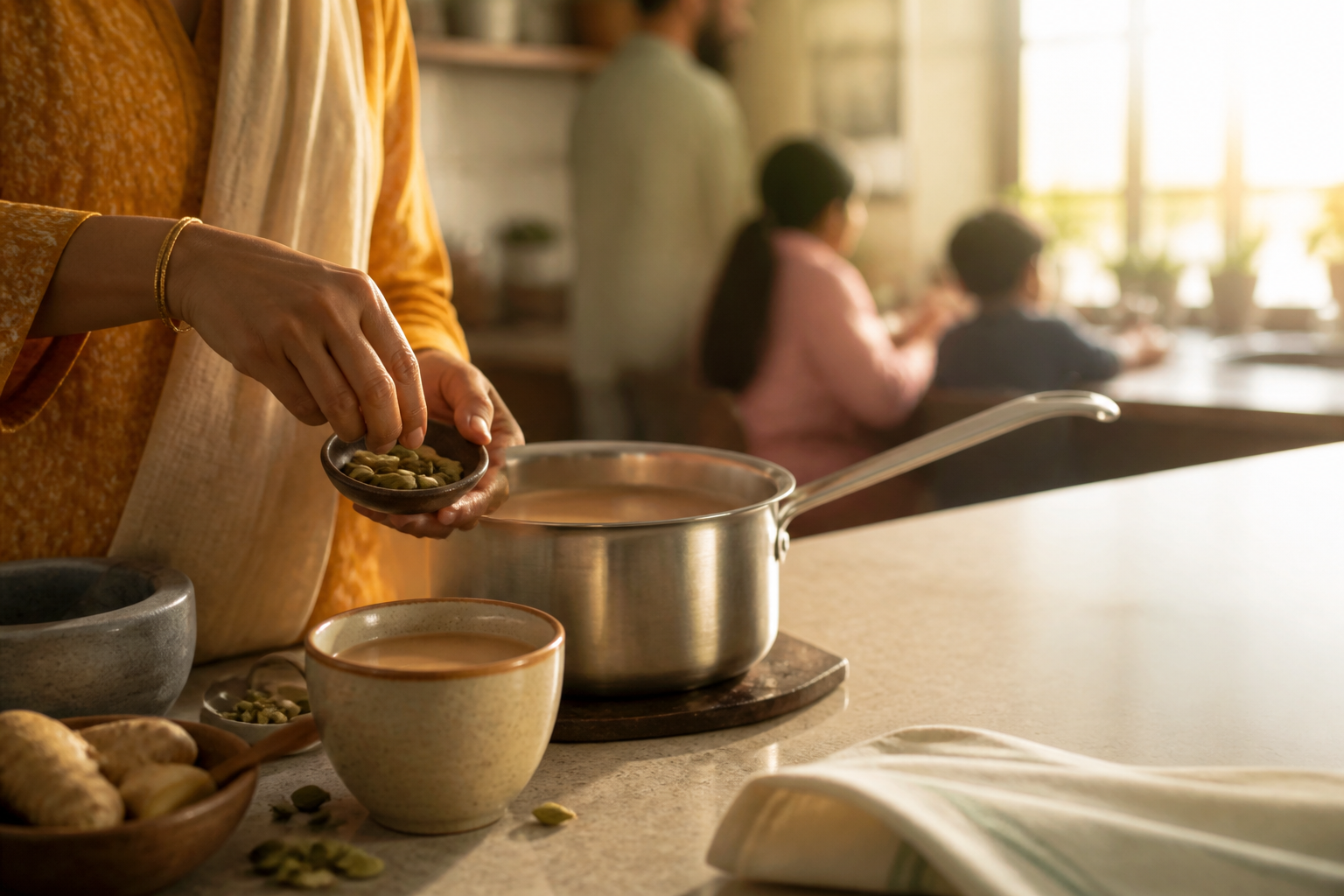
The first time I tried to remove sugar from my kitchen, I lasted three days.
Day one, I made my mother-in-law's chai with a tiny tablet I bought at the medical store. She took one sip, put the cup down, and said nothing. That silence was louder than any complaint.
Day two, I attempted kheer for a family dinner using a stevia-based “natural” sweetener I had seen advertised on Instagram. The kheer tasted like licorice. My husband asked if I had used a new spice.
Day three, I gave up.
That was 14 years ago. Since then, I have tried more sugar alternatives than I can count, read ingredient panels until my eyes blurred, and learned seven things that nobody tells you about replacing sugar in Indian cooking.
Seven findings hiding in plain sight
The label “monk fruit” usually means “look closer.”
Turn the package over. In many blends, erythritol is the first ingredient and monk fruit appears in a much smaller amount. Erythritol is inexpensive bulk; monk fruit extract is expensive. The front of the pouch may not tell you what the back of the pouch does.
The practical lesson: never make a sweetener decision from the front label alone.
That cooling sensation is not your imagination.
Erythritol can create a cooling sensation when it dissolves. It may feel refreshing in a cold drink, but it can feel strange in hot chai, coffee or kheer — especially when what you wanted was the familiar warmth of sugar.
Stevia’s bitter finish is not something everyone “gets used to.”
Steviol glycosides interact with sweet and bitter taste receptors. That is why a sweetener can be natural and still leave a licorice-like or medicinal finish in a delicate recipe.
A trusted ingredient matters as much as a low-calorie number.
Aspartame is considered safe at normal consumption levels by major food-safety bodies, but public memory of past controversies still shapes how people feel about artificial ingredients. If the label makes your family uneasy, the product has already lost some of its usefulness.
Zero calories is not the whole question.
People also want to know how a sweetener behaves in the body, how it tastes in real food, and whether it helps them stay consistent. “Zero calorie” is a number. Daily trust is a habit.
Indian context makes the evidence more useful.
Most sweetener claims are built from global research. Zeroh’s supplied materials point to a randomised, double-blind, placebo-controlled study involving 96 Indian participants. That does not make a product a treatment, but it is a more relevant proof point than a vague “clinically tested” badge.
The best substitute is the one you stop thinking about.
If a sweetener demands your attention through bitterness, cooling, complicated instructions or a strange finish, it has failed its primary job. The best sweetener lets you make chai, kheer, halwa and coffee without thinking about the substitute.
Meet Zeroh Sugar.
After 14 years of testing, I found one blend that matched the standard I kept coming back to: monk fruit and allulose, without erythritol or artificial sweeteners.
It works in chai, coffee, baking, kheer, halwa and cold beverages. My mother-in-law did not notice the switch. That is the test that matters to me.
Try the 200g pouch
Current listed price: Rs 599 · Check availability and any first-order offer.